

The internet, email, and instant messaging have brought many distractions into our modern work environment.
Instead of being able to focus on important tasks and achieve great things, many workers spend their days responding to messages, attending meetings, and struggling to complete a never-ending list of boring tasks.
But what exactly is deep work, and why is it such an important topic in discussions about productivity and well-being? Let's find out.
Deep work involves tasks that require your full attention without any distractions. It's work that challenges you mentally and has a meaningful impact, whether it's completing important projects at work or engaging in personal growth.
The term "deep work" was coined by Cal Newport, a computer science professor. In his book, "Deep Work: Rules for Success in a Distracted World," Newport provides a precise definition of deep work as:
“Professional activities performed in a state of distraction-free concentration that push your cognitive capabilities to their limit. These efforts create new value, improve your skill, and are hard to replicate.” Cal Newport

Cal Newport, the originator of the term "deep work" and author of a book on the subject, deserves our attention to understand the essence of his ideas.
First, let's explore his background and credentials.
Who is Cal Newport?
Apart from being a computer science professor at MIT, Cal Newport is a highly influential writer in the fields of productivity and success. He initially focused on providing guidance to students with books like "How to Win at College," "How to Become a Straight-A Student," and "How to Be a High School Superstar."
Later, he shifted his focus to work and lifestyle, authoring notable books such as "So Good They Can't Ignore You," "Digital Minimalism," "Deep Work," and his latest release, "A World Without Email" (a thought-provoking concept, indeed). He has earned multiple spots on the New York Times bestseller list. Newport also contributes as a writer to The New Yorker and runs a podcast called "Deep Questions." Since 2007, he has consistently shared his insights on productivity through his Study Hacks blog.
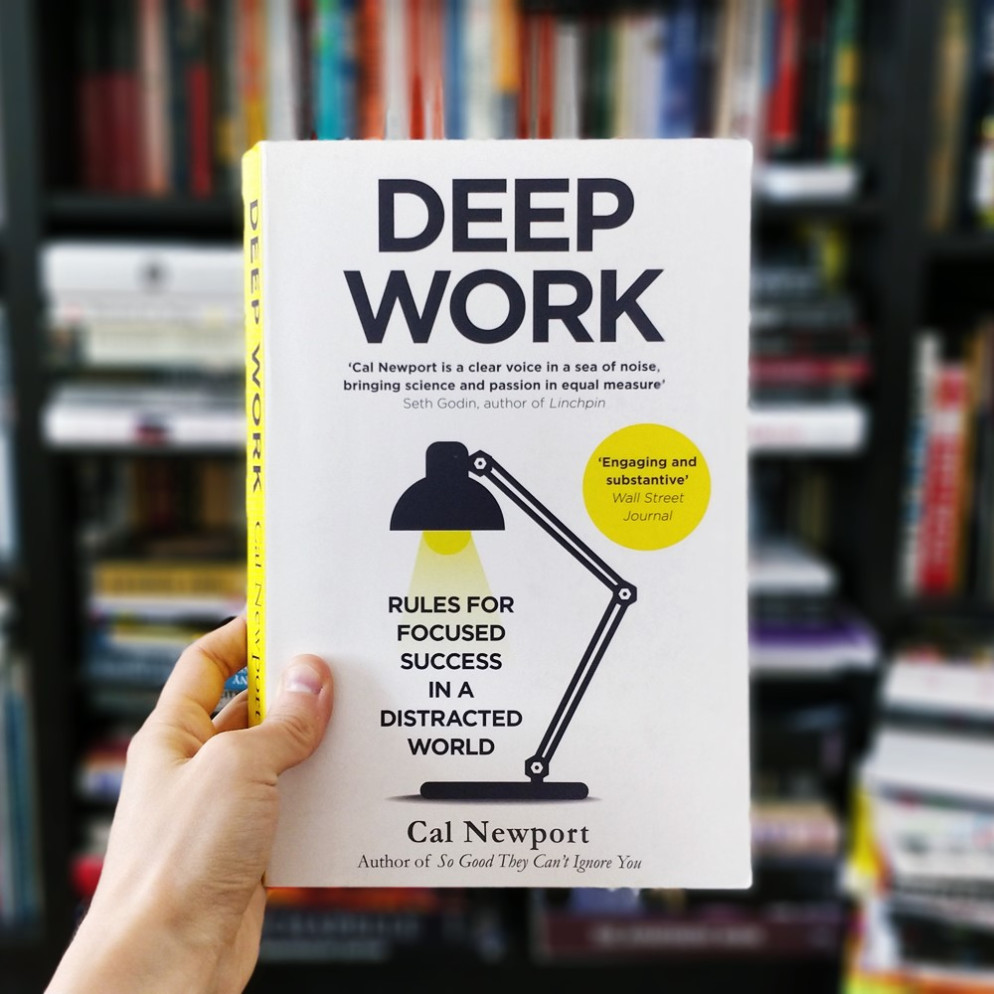
The Central Hypothesis of "Deep Work"
At the core of Newport's "Deep Work" is a compelling call to action for knowledge workers who aspire to advance in their careers and establish a healthier relationship with their work.
“The ability to perform deep work is becoming increasingly rare at exactly the same time it is becoming increasingly valuable in our economy,” writes Newport. “As a consequence, the few who cultivate this skill, and then make it the core of their working life, will thrive.”
We live in a world where big companies like Meta, Twitter, and Google invest a lot of money to grab your attention. They hire smart people right out of college and come up with clever ways to distract you.
At the same time, our work environments are getting more distracting too. Technology is everywhere, especially during the pandemic and after lockdowns. We constantly see those little green signs that show we're available on work apps, which takes our focus away.
Considering all of this, it's amazing that anyone can achieve something significant. Many people feel overwhelmed, constantly dealing with an overflowing inbox and struggling to see the results of their hard work at the end of the day.
When Cal Newport says that those who prioritize deep work will succeed, he's talking about you.
Deep work versus shallow work
Newport’s definition of deep work is:
“Professional activities performed in a state of distraction-free concentration that push your cognitive capabilities to their limit. These efforts create new value, improve your skill, and are hard to replicate.”
what is the opposite of deep work? Shallow work.
“Shallow Work: Noncognitively demanding, logistical-style tasks, often performed while distracted. These efforts tend to not create much new value in the world and are easy to replicate.”
“Shallow Work: Noncognitively demanding, logistical-style tasks, often performed while distracted. These efforts tend to not create much new value in the world and are easy to replicate.”